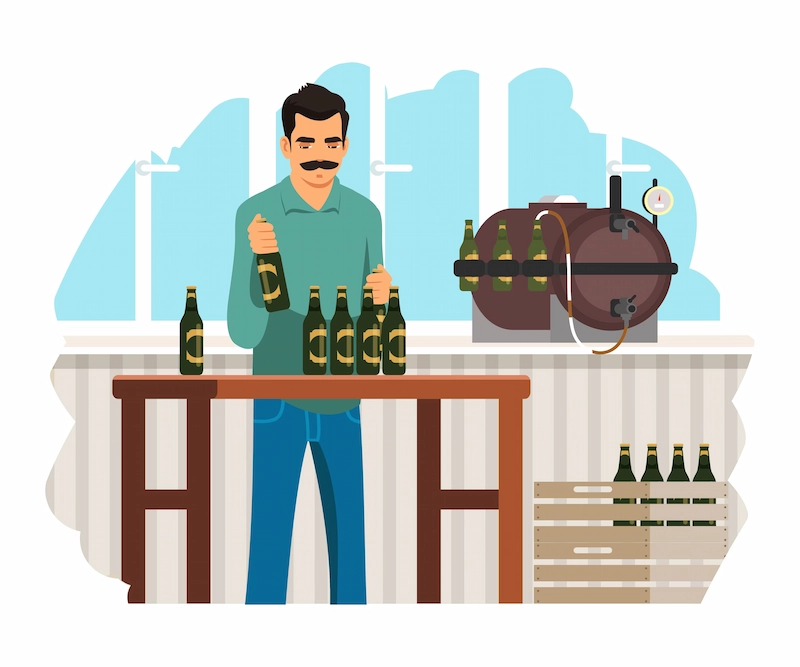
Alcohol is a drink many people enjoy. It comes in forms like beer, wine, and spirits. But have you ever wondered about the science behind it? This article will explain the basics in easy words, with a focus on the chemical side. People have made alcohol for thousands of years. It starts with simple things like fruits or grains. The key step is a process called fermentation. This turns sugars into alcohol through chemical changes.
How Alcohol Is Formed
How alcohol is formed begins with sugar. Sugar can come from grapes for wine or barley for beer. Tiny living things called yeast eat the sugar. Yeast is like a small fungus.
When yeast eats sugar, it makes two main things: alcohol and bubbles of gas. The gas is carbon dioxide. This happens without air, in a closed space. It’s called anaerobic respiration, a chemical process where no oxygen is used.
The main type of alcohol made this way is ethanol. Ethanol is safe to drink in small amounts. The process has clear chemical steps. First, sugar breaks down into smaller parts through glycolysis. Glycolysis is a series of reactions that split glucose into pyruvate.
Glucose is a sugar with the formula C6H12O6. In glycolysis, one glucose molecule makes two pyruvate molecules. This happens in the yeast cell.
Next, pyruvate is changed. An enzyme called pyruvate decarboxylase removes carbon dioxide from pyruvate. This makes acetaldehyde. Acetaldehyde is CH3CHO.
Then, another enzyme, alcohol dehydrogenase, adds hydrogen to acetaldehyde. This turns it into ethanol, CH3CH2OH. At the same time, it helps balance chemicals inside the yeast by regenerating NAD+.
The overall chemical equation is simple: C6H12O6 → 2 CH3CH2OH + 2 CO2. This shows how sugar becomes ethanol and carbon dioxide.
For example, in wine, grapes are crushed. The juice has natural sugar. Yeast is added, and it ferments for days or weeks. The longer it ferments, the stronger the alcohol.
In beer, grains like barley are soaked and sprouted. This makes sugars from starches. Enzymes in the grain help break down starches into sugars. Then, it’s boiled with hops for flavor. Yeast ferments it next.
Spirits like vodka or whiskey need one more step. After fermentation, the liquid is heated in a still. This is distillation, a chemical separation based on boiling points.
Distillation boils the mix. Alcohol boils at a lower heat than water, about 78°C for ethanol versus 100°C for water. So, the alcohol vapor rises first. It cools and turns back to liquid. This makes drinks with more alcohol, like 40% or higher.
How alcohol is formed can also happen in nature. Overripe fruits can ferment on their own. Animals sometimes eat them and get a bit drunk!
Scientists study this process. They use it not just for drinks, but for fuel too. Ethanol can power cars as biofuel.
A fun fact: Bread uses a similar process. Yeast makes gas to make dough rise. But in bread, the alcohol evaporates when baked.
Types of Alcohol Formation
Different drinks use different ways. Wine uses fruit sugars like fructose. Beer uses grain starches turned to sugar like maltose. Spirits add distillation.
Cider comes from apples. It’s like wine but with fruit. Mead is from honey. All use fermentation.
In warm places, rice is used for sake. It’s a Japanese drink. The process is a bit different but still uses yeast and enzymes to break down starches.
Other microorganisms can do fermentation too. Some bacteria make alcohol, but yeast is most common for drinks.
A Research Finding
Did you know about the energy in this process? In alcoholic fermentation, one mole of glucose is converted into two moles of ethanol and two moles of carbon dioxide, producing two moles of ATP (energy) for the yeast. This is from studies on the biochemistry of fermentation.
This data helps us understand how efficient the process is. It shows the balance in the chemical reactions.
Safety and Fun Facts
Alcohol is fun but must be used wisely. Too much can harm health. Always drink in moderation.
How alcohol is formed has changed over time. Long ago, people found it by accident. Now, factories control it with science.
In labs, they pick special yeast. This makes better tastes. Some yeast can handle more sugar for stronger drinks.
Fermentation needs the right heat, around 20-30°C for most yeast. Too hot or cold, and it stops. That’s why brewers watch it closely.
Alcohol can be clear or colored. Colors come from aging in wood barrels. Like whiskey gets brown from oak. This adds chemical compounds for flavor.
Some drinks add flavors after. Like gin with herbs. These are natural chemicals that give taste.
More About the Chemical Process
Let’s look closer at the science. Besides ethanol, fermentation makes byproducts. These are higher alcohols from amino acids via the Ehrlich pathway.
For example, yeasts can make fusel oils, which are chemicals like isoamyl alcohol. They add flavor but too much can be bad.
In big factories, huge tanks hold the mix. They can make thousands of liters at once. They monitor pH and temperature to keep the chemical reactions going right.
After forming alcohol, it’s bottled or canned. Labels show how much alcohol is in it, like ABV (alcohol by volume).
People test it for quality. They check taste, safety, and chemical purity.
How alcohol is formed is amazing. From simple sugar to a drink in your hand. It’s all chemistry at work.
This process helps jobs too. Many work in farms, factories, and stores.
In some places, home brewing is popular. You can try it with kits. But follow laws and learn the chemical safety.
Alcohol links to culture. In parties or meals, it’s common.
But remember, not everyone drinks. There are non-alcohol options too.
Wrapping Up
We learned how alcohol is formed. It’s mainly through the chemical process of fermentation with yeast, sugar, and enzymes. Then, some are distilled.
This guide keeps it simple but adds chemical details. Now you know the science behind it.
(Word count: 876)
FAQs
- What is fermentation? Fermentation is when yeast turns sugar into alcohol and gas through chemical reactions. It’s the main way alcohol is made.
- Why do we distill some alcohols? Distillation makes the alcohol stronger. It uses different boiling points to separate ethanol from water.
- Can I make alcohol at home? Yes, but check local laws. Home brewing kits are safe and fun for beer or wine, but understand the chemical process.
- Is all alcohol the same? No. Ethanol is the drinking kind. Other types like methanol are dangerous and not for drinks.
- How long does fermentation take? It depends. Beer takes about a week. Wine can take weeks or months, depending on the chemical conditions.
- What are the main chemicals in alcohol formation? Glucose (sugar), pyruvate, acetaldehyde, and ethanol. Enzymes help change one to the other.