
July 28, 2026
How Is Alcohol Made? The Full Whiskey Production Process Explained
The Science Behind How Alcohol Is Made
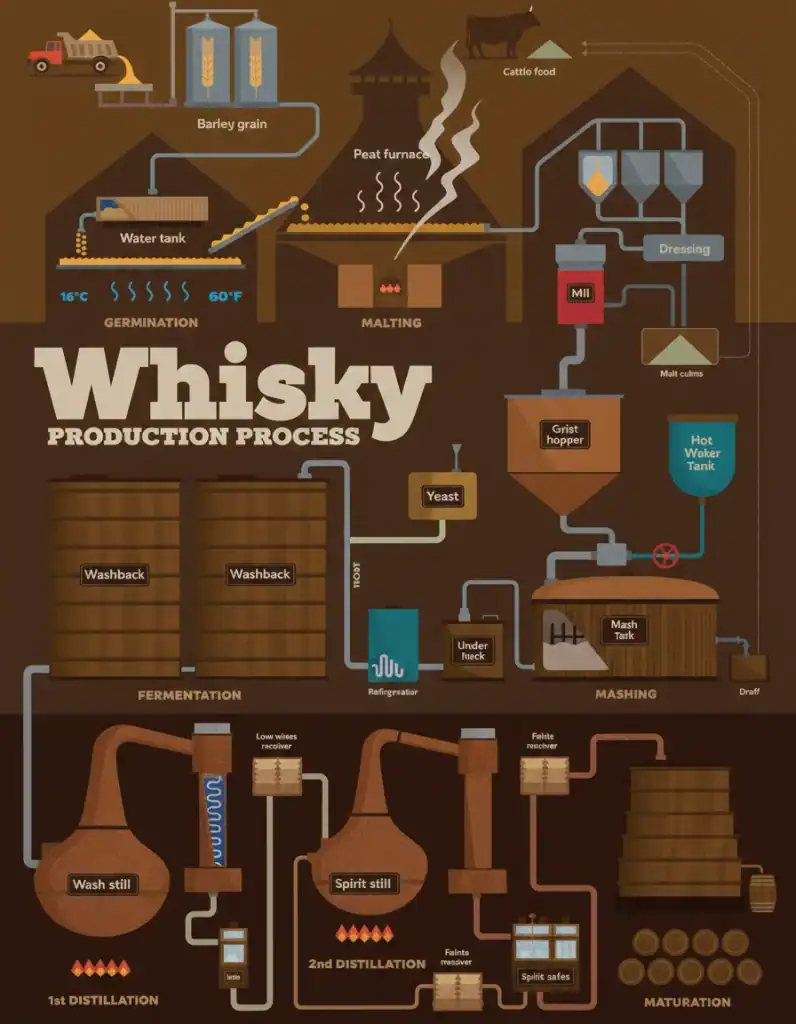
How is alcohol made — from a simple sack of barley to the whiskey in your glass? The answer involves seven distinct stages: germination, malting, mashing, fermentation, two rounds of distillation, and finally maturation. Each step plays a specific role in transforming raw grain into the complex, flavorful spirit whiskey drinkers know and love.
1. Germination: Where It All Begins
The process of how alcohol is made starts with barley grain, soaked in a water tank at a controlled temperature (around 16°C/60°F). This soaking triggers germination — the grain begins to sprout, activating enzymes that will later convert starches into fermentable sugars. This early stage is essential: without it, the grain wouldn’t contain the sugar needed to eventually produce alcohol.
2. Malting: Developing Flavor Early
Once germinated, the grain moves to the malting stage, where it’s dried over a peat furnace. This step halts germination at just the right point and, depending on how much peat smoke the grain absorbs, can introduce whiskey’s signature smoky character right from the start. The dried, malted grain is then milled and separated — the husks (malt culms) are set aside, often used as cattle feed, while the useful grain moves forward in the process.
3. Mashing: Extracting the Sugar
The milled grain enters the grist hopper before moving to the mash tank, where it’s mixed with hot water from the hot water tank. This mixture, called the mash, allows the enzymes activated during germination to convert the grain’s starches into fermentable sugars, creating a sweet liquid known as wort. The leftover solid grain material (draff) is removed and, like the malt culms, is often repurposed as animal feed — very little goes to waste in traditional whiskey production.
4. Fermentation: Creating Alcohol for the First Time
The sweet wort is transferred into large vessels called washbacks, where yeast is added. This is where alcohol is actually created: yeast consumes the sugars in the wort and produces ethanol and carbon dioxide as by-products. The resulting liquid, called wash, has a relatively low alcohol content — similar to a rough beer — and needs further processing to become a true spirit.
5. First Distillation: Separating Alcohol from Water
The wash moves into the wash still for its first distillation. Because alcohol boils at a lower temperature (78.5°C/173.3°F) than water (100°C/212°F), heating the wash allows the alcohol to evaporate first. This vapor is captured and condensed into a stronger liquid called low wines, collected in the low wines receiver — a more concentrated, but still not final, spirit.
6. Second Distillation: Refining the Spirit
The low wines then pass through a second distillation in the spirit still for further purification. This stage separates out unwanted compounds (called faints) using a faints receiver, while the purified spirit passes through the spirit safe, where distillers carefully monitor and select the “heart” of the run — the clearest, highest-quality spirit — for the next stage.
7. Maturation: Where Whiskey Gets Its Character
The clear, high-proof spirit produced by distillation — often called new make — is still harsh and sharp. It’s the maturation stage that transforms it into whiskey. The spirit is filled into oak casks and left to rest for years, sometimes decades. During this time, the wood interacts with the spirit, mellowing its harsh edges and developing the rich color, aroma, and flavor whiskey is known for. The type of cask used — bourbon, sherry, wine, or others — has a major influence on the final character of the whiskey.
From Barley to Bottle
So, how is alcohol made into the whiskey you enjoy? It’s this complete seven-stage journey — germination and malting preparing the grain, mashing extracting its sugars, fermentation creating alcohol, two rounds of distillation concentrating and refining the spirit, and maturation giving it depth and character — that defines every whiskey you’ll ever taste.
Taste the Process for Yourself
Now that you know exactly how alcohol is made into whiskey, the best way to appreciate the craft is to taste it. Explore our Whiskey Tasting Kits to sample premium whiskeys shaped by this exact process, or join a live, expert-led whiskey tasting event to taste and learn in real time.