Becoming a whisky taster is not just about drinking whisky — it’s about developing a refined palate, deep knowledge, and the ability to evaluate aroma, flavour, texture, and finish with precision. Whether you want to do it as a serious hobby, work in the industry, or become a professional whisky writer or educator, the path is clear and rewarding.
Here’s a complete, practical guide on how to become a skilled whisky taster.
1. Build a Strong Foundation of Knowledge
Before you start tasting seriously, you need to understand whisky itself.
- Learn the major whisky regions and styles: Scotland (Speyside, Islay, Highlands, Lowlands, Campbeltown), Ireland, America (Bourbon, Rye, Tennessee), Japan, Canada, and emerging regions.
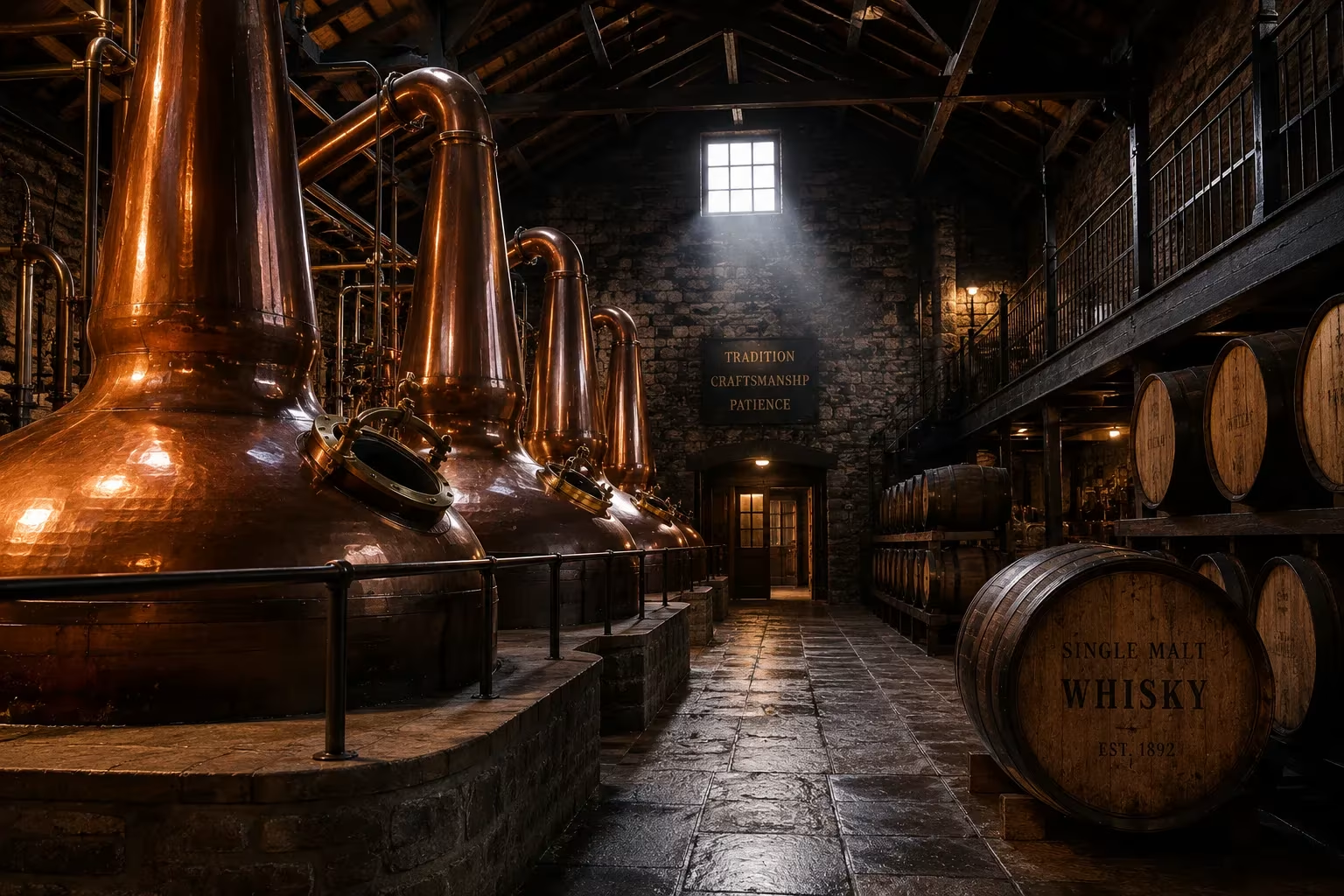
- Understand the production process: malting, mashing, fermentation, distillation, maturation, and finishing.
- Study the influence of cask type (ex-bourbon, sherry, wine casks, virgin oak), age, and climate on flavour.
- Read reliable books such as Whisky: The Manual by Dave Broom, The World Atlas of Whisky by Dave Broom, or Jim Murray’s Whisky Bible.
Knowledge turns random tasting into structured evaluation.
2. Develop Your Sensory Skills
A good whisky taster trains the nose and palate systematically.
Practice nosing and tasting daily:
- Use a proper tulip-shaped glass (Glencairn is ideal).
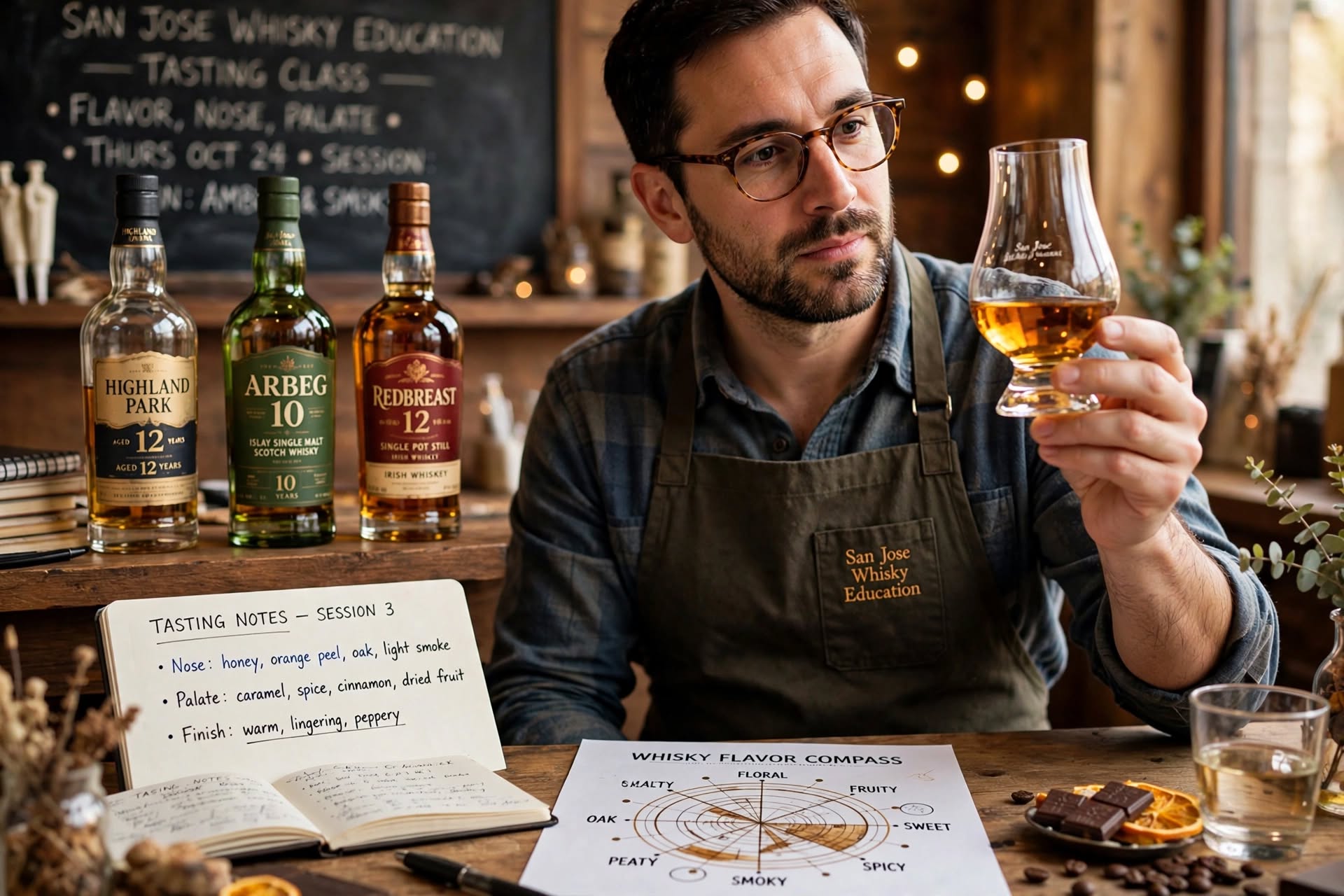
- Smell the whisky first without water, then with a few drops of water to open it up.
- Identify primary aromas: fruit, floral, spice, smoke, oak, vanilla, caramel, leather, etc.
- Taste slowly — note the arrival, mid-palate, and finish.
- Keep a tasting notebook. Write down every impression.
Useful training methods:
- Blind tasting (cover the labels).
- Compare similar whiskies side by side (e.g., two different Speyside single malts).
- Use aroma kits or flavour wheels (the Scotch Whisky Association flavour wheel is excellent).
- Practice with other spirits and even food to sharpen your sense of smell and taste.
3. Taste Widely and Deliberately
Quantity matters, but quality of attention matters more.
- Start with accessible, well-known expressions and gradually move to rarer or more complex ones.
- Explore different price ranges — excellent whisky exists under $50 as well as at $200+.
- Attend whisky festivals, tasting events, and masterclasses whenever possible.
- Join a local whisky society or online communities where people share tasting notes.
Aim to taste at least 2–3 different whiskies per week with full focus.
4. Learn Professional Tasting Technique
Professional tasters follow a consistent method:
- Appearance – Colour and viscosity (legs/tears).
- Nose – Aromas before and after adding water.
- Palate – Flavours, mouthfeel, balance, complexity.
- Finish – Length, development, and aftertaste.
- Overall – Balance, quality, and personal score (many use a 100-point scale).
Record everything. Over time you will notice patterns and improve consistency.
5. Get Formal Education and Credentials (Optional but Powerful)
If you want to turn tasting into a career or gain serious credibility:
- Whisky EDU courses
- WSET (Wine & Spirit Education Trust) Level 1–3 in Spirits
- Scotch Whisky Experience or similar regional courses
- Keeper of the Quaich (for those deeply involved in Scotch)
- Online programmes from the Institute of Brewing & Distilling or specialised whisky academies
Certificates are not mandatory, but they accelerate learning and open professional doors.
6. Build Experience and Share Your Knowledge
- Write tasting notes publicly (blog, Instagram, YouTube, or your website).
- Host small tasting sessions for friends.
- Volunteer or work at whisky bars, festivals, or distilleries.
- Contribute reviews to platforms like Whiskybase, Reddit’s r/whisky, or specialised magazines.
The more you communicate your impressions, the sharper your own tasting ability becomes.
7. Stay Curious and Humble
Even experienced tasters continue learning. New cask finishes, innovative production methods, and emerging whisky nations constantly expand the flavour map. Stay open-minded and never assume you “know it all.”
Final Thoughts
Becoming a whisky taster is a journey of patience, practice, and passion. You don’t need expensive bottles or fancy titles to start — you only need curiosity and consistent effort.
Start today: pick one bottle, take proper notes, and compare it with another next week. In a few months you will already taste whisky very differently.