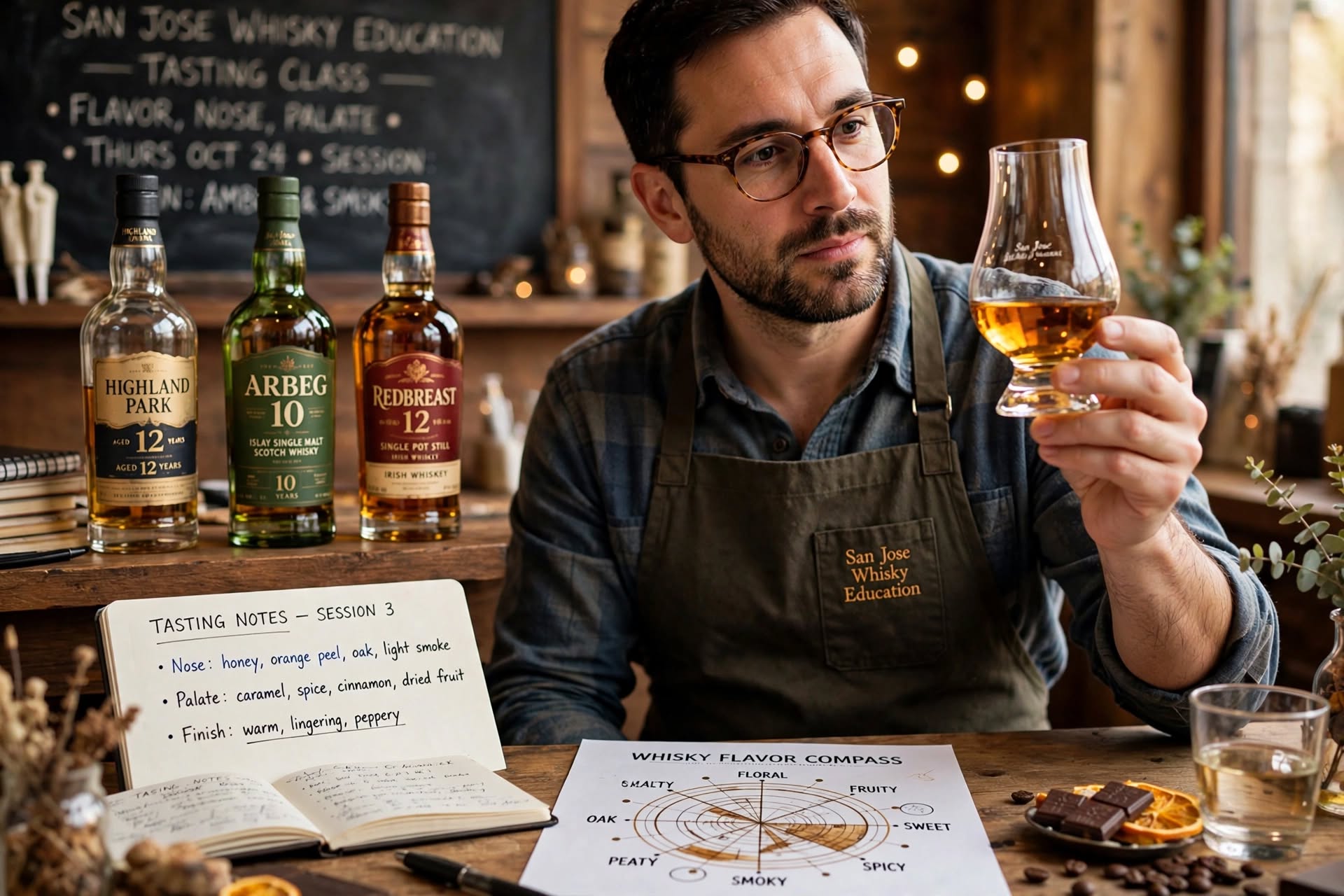
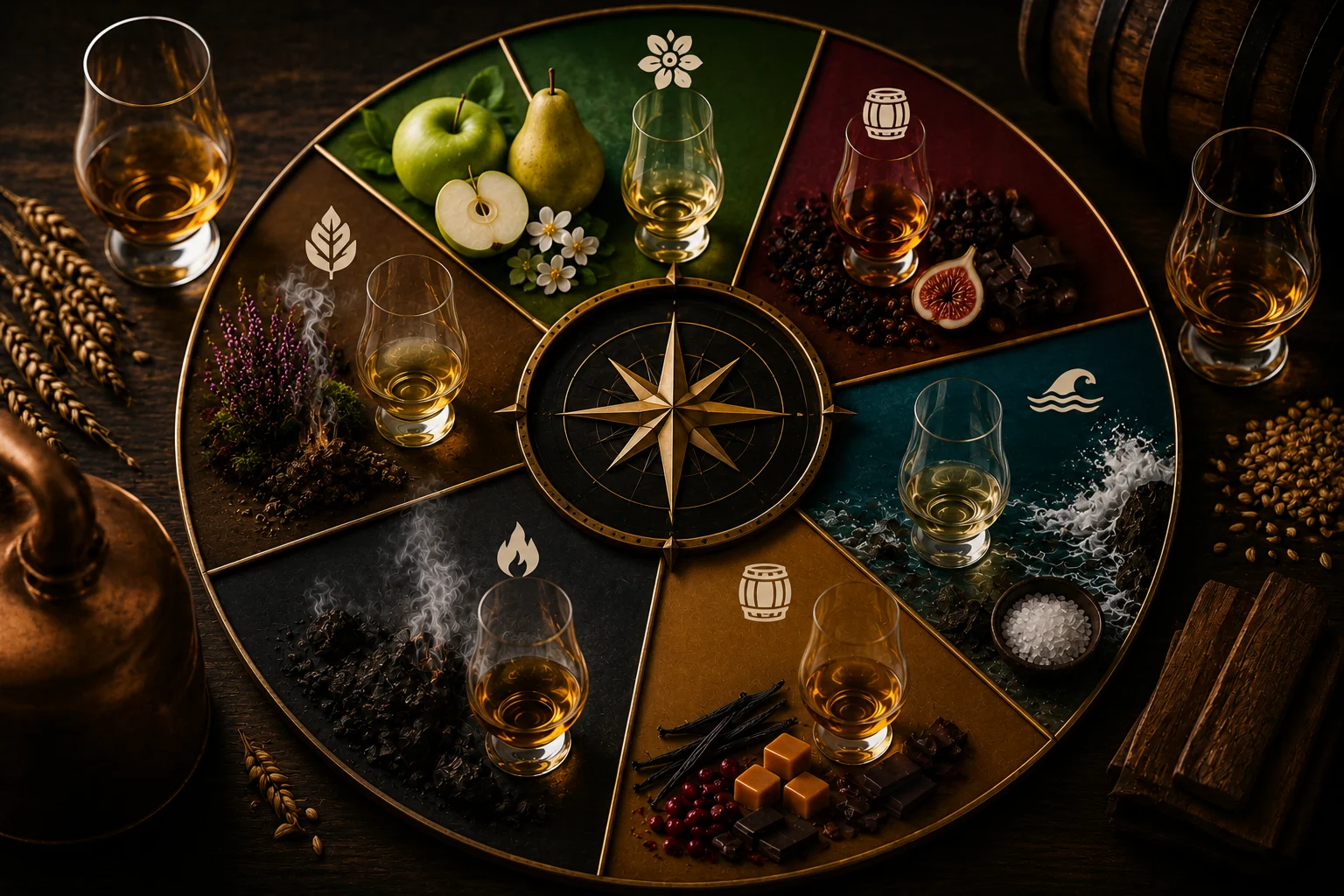
When most people begin exploring whisky, they’re often introduced to maps of Scotland and its famous whisky regions. While these regions remain an important part of whisky’s history, they don’t always tell you how a whisky will taste.
At Whisky EDU, we believe there’s a more practical way to discover whisky—through flavor.
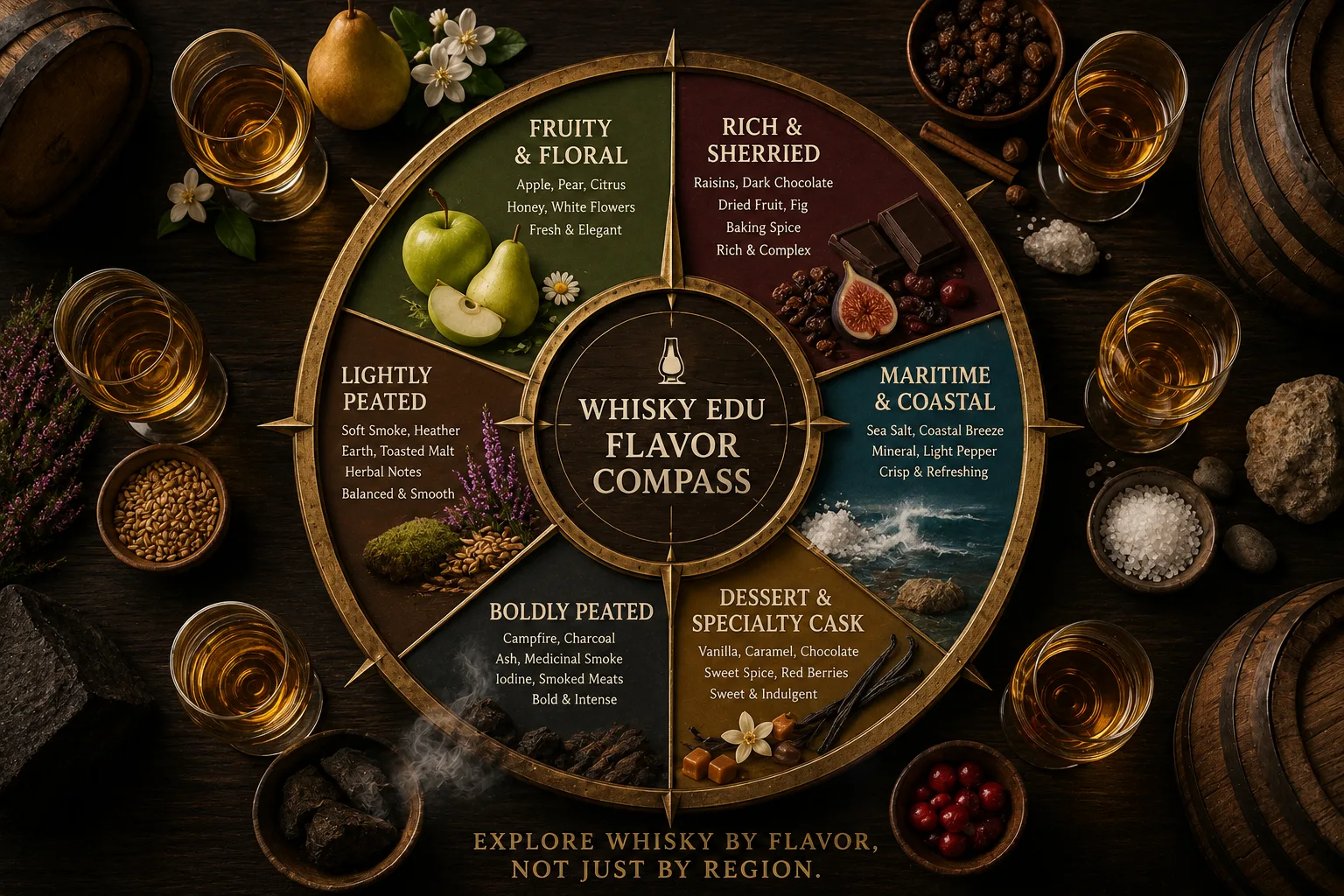
The Whisky EDU Flavor Compass is designed to help you explore whisky based on what you actually experience in your glass. Whether you enjoy bright fruit, rich sherry influence, gentle smoke, or bold peat, understanding flavor profiles makes discovering new whiskies more intuitive and enjoyable.
Why a Flavor Compass?
Traditional whisky education often starts with geography — and as we explain in why whisky flavor is more than region, that map only takes you so far.
Today, production methods, cask selection, fermentation, peat level, and maturation have a much greater influence on flavor than location alone.
Two whiskies from the same region can taste completely different, while whiskies from opposite sides of the world may share remarkably similar flavor characteristics.
The Whisky EDU Flavor Compass encourages you to explore whisky by what you enjoy tasting, rather than simply where it was produced.
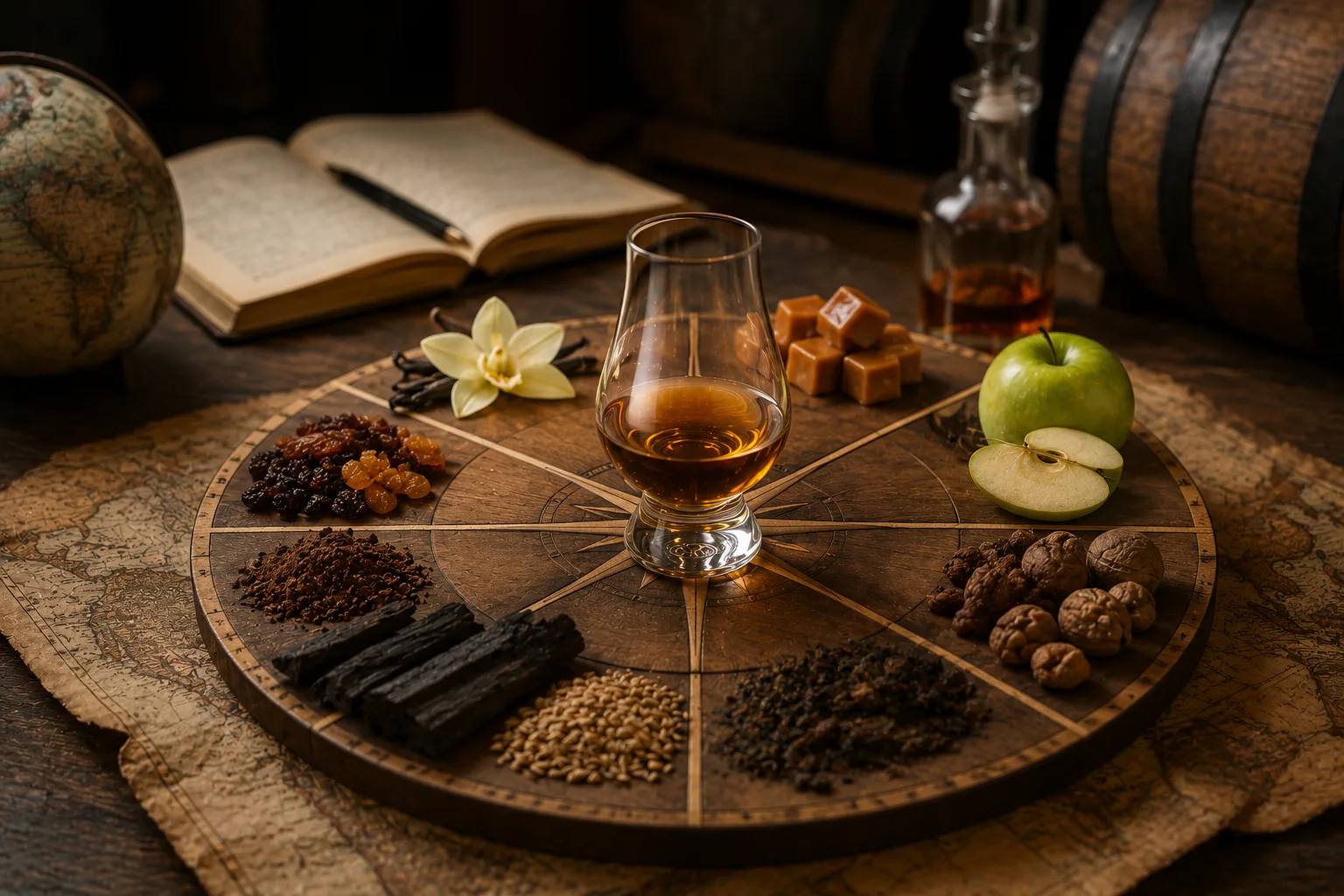

The Six Flavor Families
Rather than memorizing regions, start by discovering which flavor family best matches your palate. If you are new to all of this, our beginner’s tasting guide covers the four-step method first.
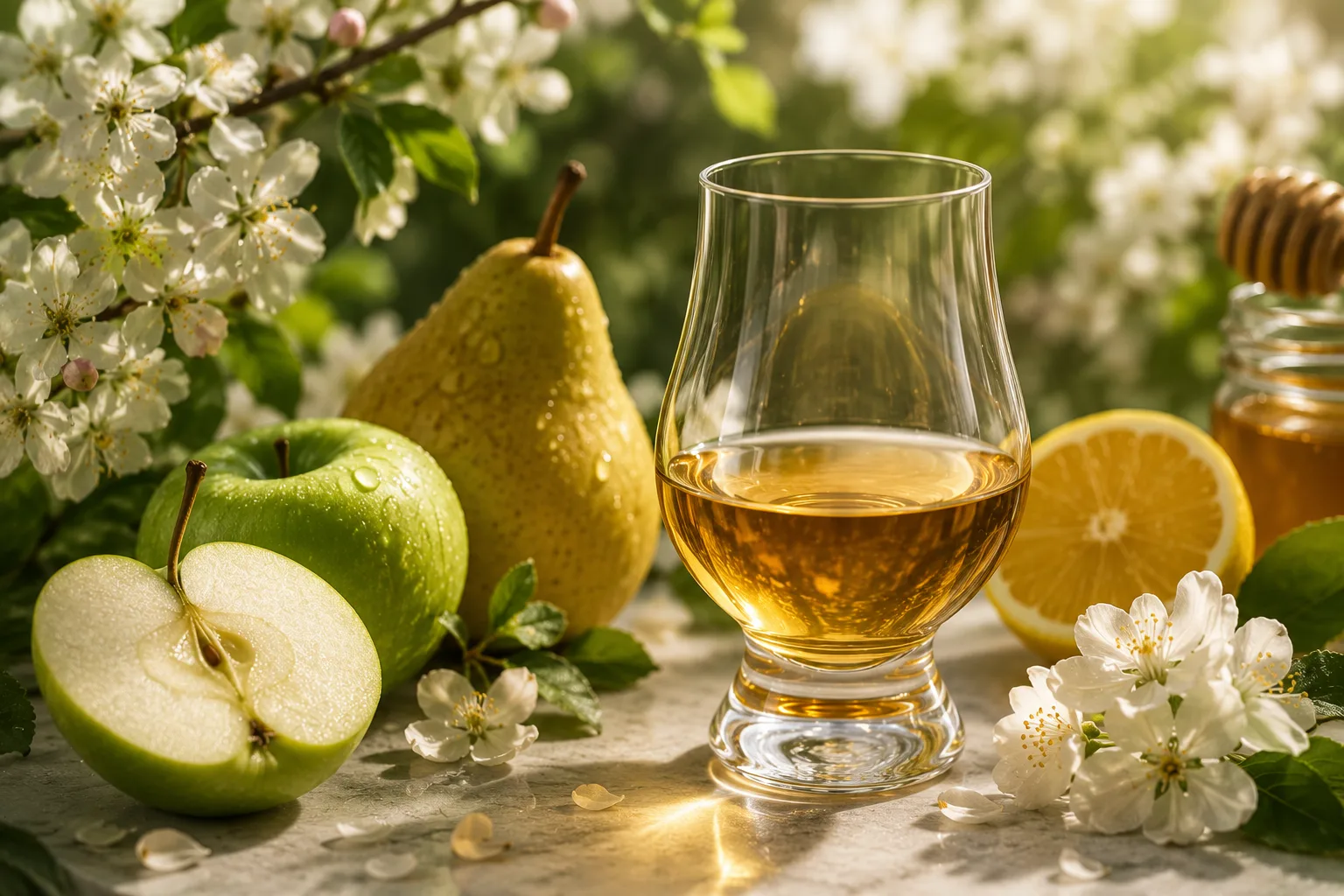
Fruity & Floral
Bright, elegant, and approachable.
Typical flavors include:
- Apple
- Pear
- Citrus
- Honey
- White flowers
- Fresh orchard fruit
These whiskies are often light, refreshing, and an excellent introduction for newcomers — and a good place to meet single malt whisky.
Examples include:
- Glenlivet
- Glenmorangie
- Arran
- Nc’nean
Rich & Sherried
Full-bodied with layers of sweetness and spice.
Common tasting notes:
- Raisins
- Dark chocolate
- Dried fruit
- Fig
- Baking spice
- Toffee
These whiskies are often matured or finished in sherry-seasoned casks, creating rich and complex flavors.
Examples include:
- GlenAllachie
- GlenDronach
- Dingle
- Seven Seals Sherry


Maritime & Coastal
Influenced by coastal maturation and sea air.
Look for notes such as:
- Sea salt
- Coastal breeze
- Mineral
- Light pepper
- Gentle oak
These whiskies often feel crisp and refreshing while maintaining excellent complexity.
Examples include:
- Old Pulteney
- Isle of Harris
- Raasay
- Talisker
Lightly Peated
A gentle introduction to smoky whisky. Peat enters during malting, when the barley is dried over a peat fire.
Common flavors:
- Soft campfire smoke
- Heather
- Earth
- Toasted malt
- Herbal notes
These whiskies offer balance, allowing smoke to complement rather than dominate the spirit.
Examples include:
- Highland Park
- Benromach
- Ardnamurchan

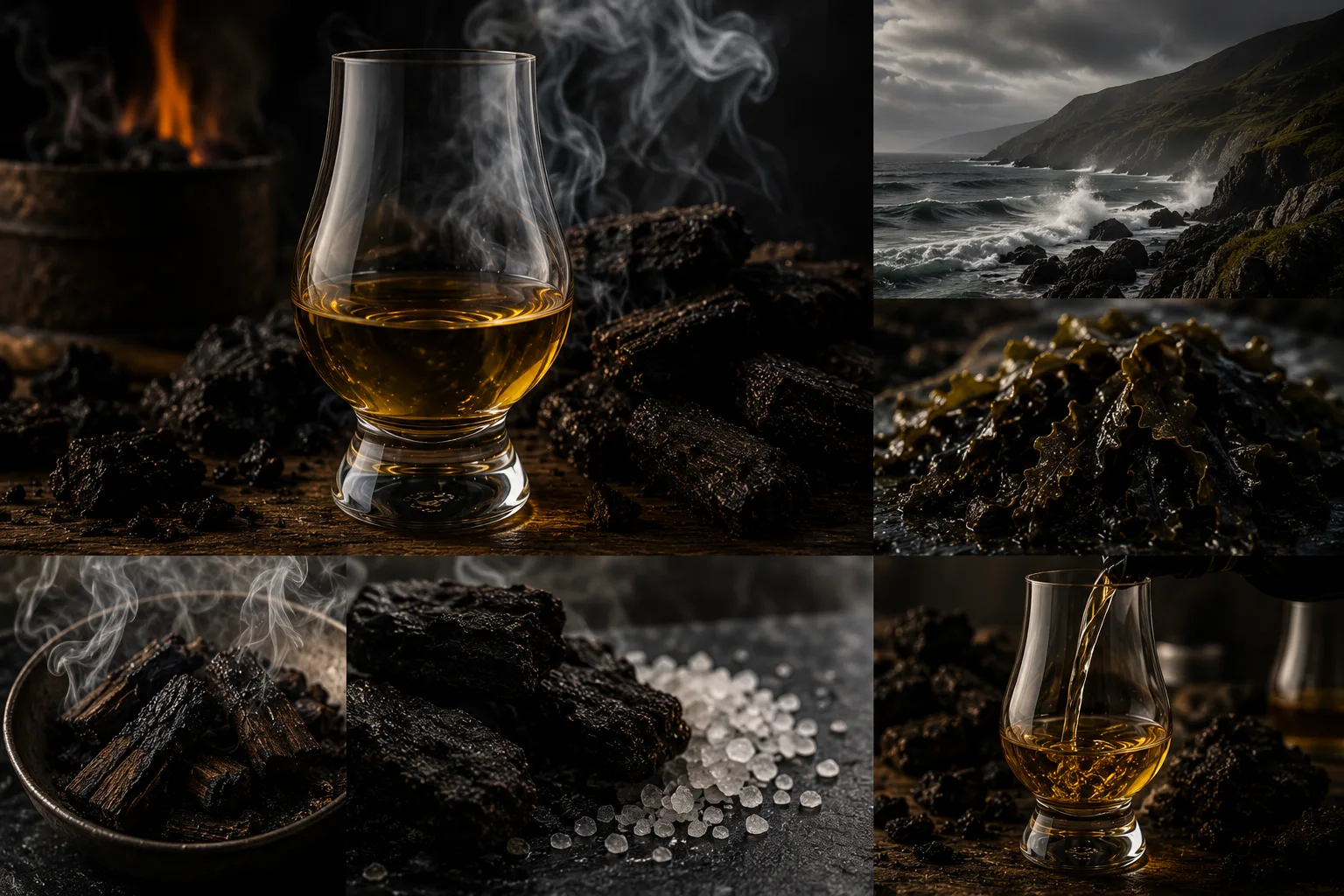
Boldly Peated
For those who enjoy powerful smoky flavors.
Expect notes of:
- Campfire
- Charcoal
- Ash
- Medicinal smoke
- Coastal iodine
- Smoked meats
These whiskies showcase the bold character that many enthusiasts seek.
Examples include:
- Ardbeg
- Laphroaig
- Port Charlotte
- Octomore
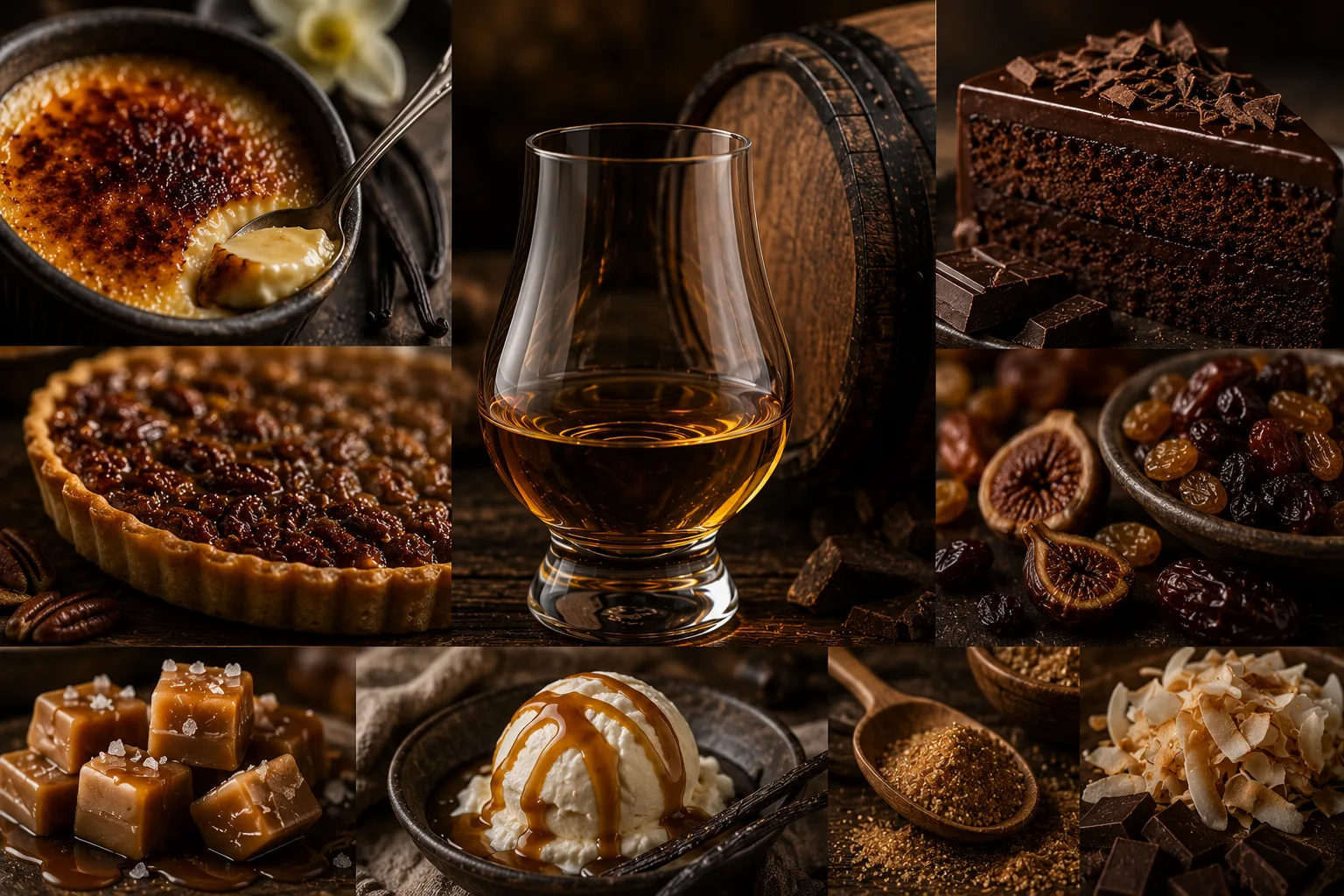
Dessert & Specialty Cask
Sweet, rich, and full of cask influence.
Typical flavors:
- Vanilla
- Caramel
- Chocolate
- Honey
- Red berries
- Sweet spice
These whiskies demonstrate how different cask finishes can create unique and memorable flavor experiences. The Scotch Whisky Association explains how maturation works in more depth.
Examples include:
- Starward Nova
- Seven Seals Amarone
- Seven Seals Port
- Balvenie Caribbean Cask
- GlenAllachie Cuvée

How to Use the Flavor Compass
Instead of asking,
“Which region is this whisky from?”
Try asking:
- What flavors do I enjoy?
- Do I prefer fruit or smoke?
- Am I looking for something rich or delicate?
- Do I enjoy wine cask influence?
- How much peat do I like?
These questions will often lead you to whiskies you’ll enjoy far more than relying on geography alone.
Whisky EDU Tip
The Whisky EDU Flavor Compass isn’t about replacing traditional whisky regions—it’s about giving you another way to explore whisky.
As the world of whisky continues to evolve, understanding flavor provides a more practical and enjoyable path for discovering new distilleries, countries, and styles. Start with nosing basics, pour into a proper tasting glass, and check the Scotch Whisky Association FAQs if a term is new to you.
Every bottle tells its own story. The Flavor Compass simply helps you find the stories you’ll enjoy most.