Whiskey slang is older than most of the bottles on the shelf. Some words came from Gaelic monks, some from gold miners in Alaska, and some from bartenders who needed a quick way to take an order. Knowing them makes a bar menu, an old novel or a distillery tour much easier to follow.
Below are 25 whiskey slang words and bar terms, grouped into nicknames for the drink itself, words you will hear when ordering, and terms from the distillery. Each one comes with a short meaning and, where it is known, where the word came from.
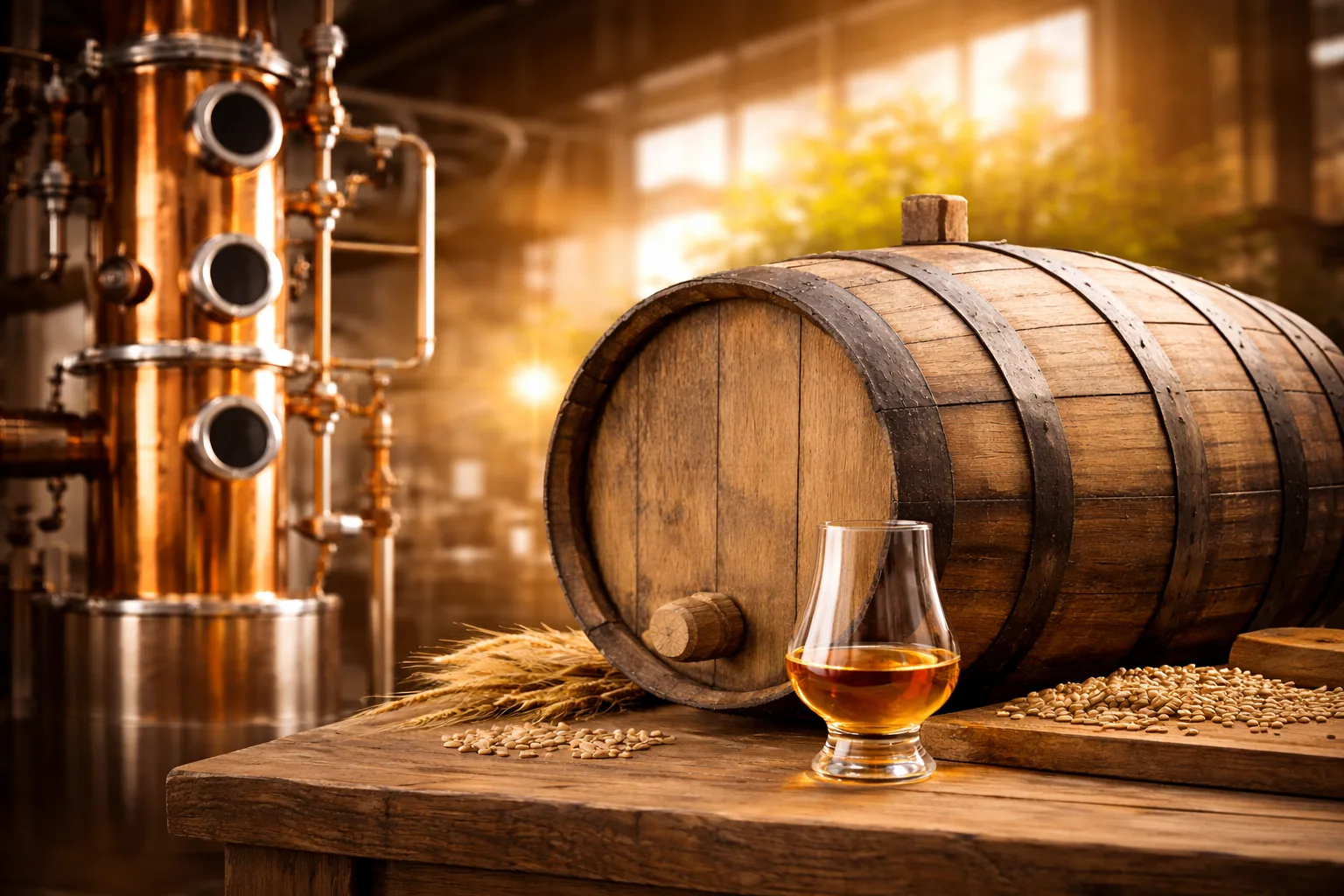
Table of Contents
Whiskey slang at a glance
| Word | What it means | Friendly or rude? |
|---|---|---|
| Dram | A small measure of whisky | Friendly |
| Hooch | Any liquor, often cheap or homemade | Casual |
| Firewater | Strong spirit; an old frontier word | Dated, can offend |
| Moonshine | Illegally made, usually unaged whiskey | Casual |
| White lightning | Clear, unaged moonshine | Casual |
| Rotgut | Harsh, poor-quality liquor | Rude |
| Brown liquor | Whiskey, brandy and other aged spirits | Casual |
| The creature | Irish nickname for whiskey | Friendly |
| Neat | Served at room temperature, nothing added | Bar term |
| Angel’s share | Whisky lost to evaporation in the cask | Distillery term |
Nicknames for whiskey itself
1. Water of life (uisge beatha)
The word whisky itself is slang that stuck. It comes from the Gaelic uisge beatha, “water of life”, a translation of the Latin aqua vitae that medieval monks used for distilled spirits. English speakers heard it as “usquebaugh”, then shortened it to “whisky”. Our post on whiskey vs whisky explains why the spelling later split in two.
2. Dram
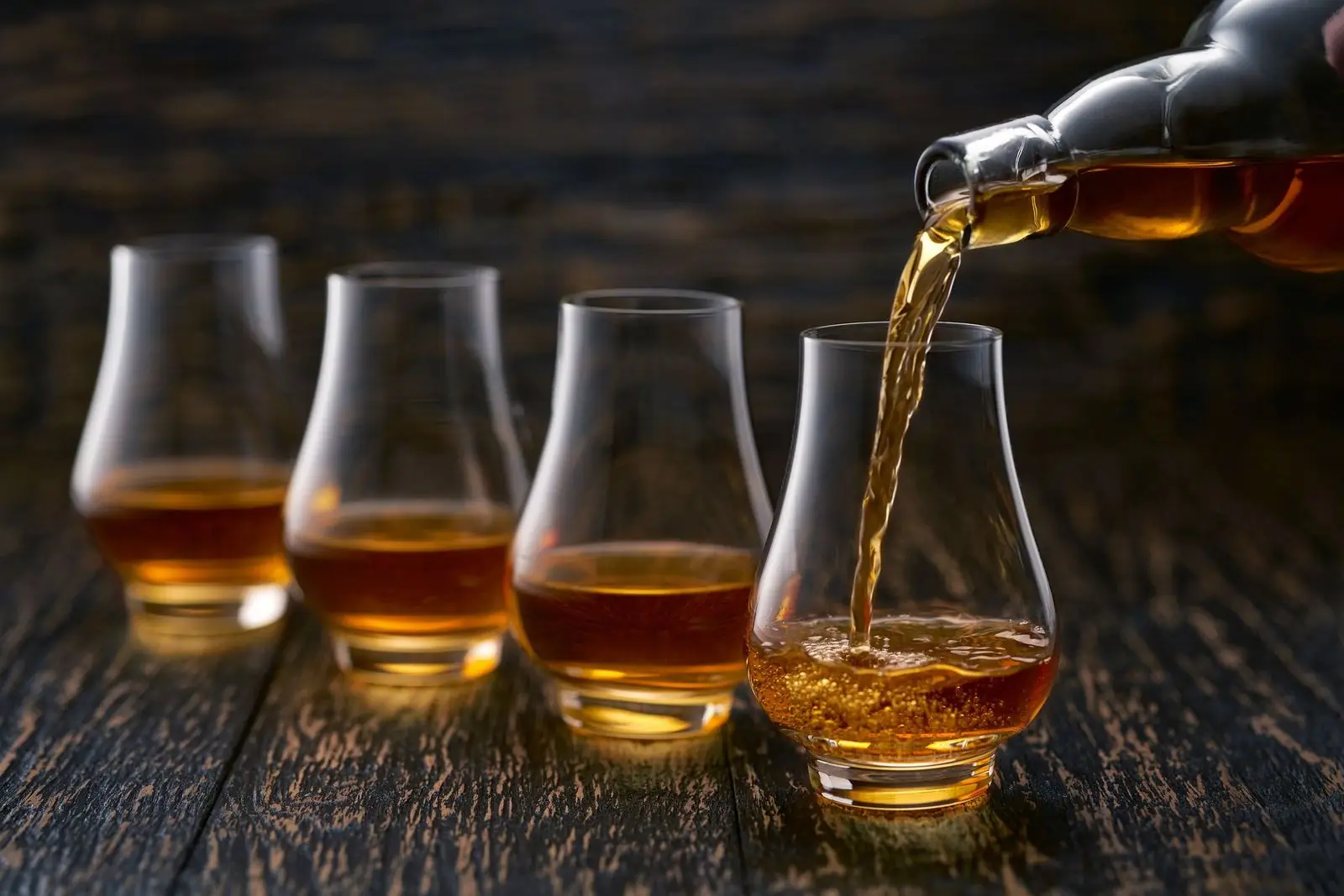
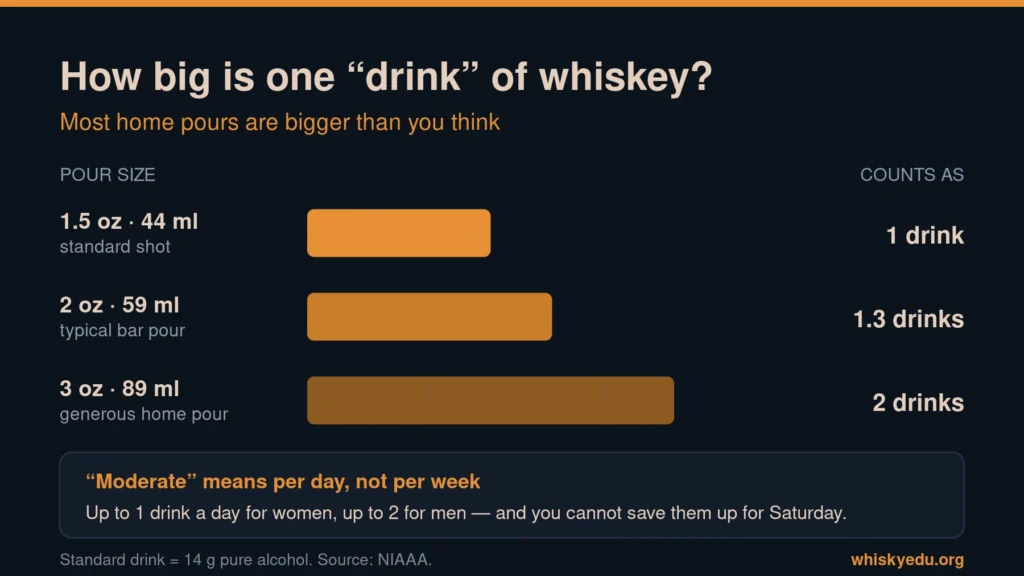
In Scotland a dram is simply a drink of whisky, usually a small one. The word comes from the drachm, an old unit of weight, and has no fixed size today. “Fancy a wee dram?” is an invitation, not a measurement. For actual pour sizes, see how much two fingers of whiskey is.
3. Hooch
Hooch is one of the most widely used pieces of whiskey slang, and its story starts in Alaska. According to Merriam-Webster, it is short for hoochinoo, a liquor made by the Hutsnuwu, a Tlingit people, and first appears in print in 1897. Gold miners heading for the Klondike spread the word south. Today it means any cheap or homemade liquor.
4. Firewater
Firewater appears in English in the early 1800s as a translation of words used by Native American peoples for the strong spirits traders brought. Because of that history, many people now find it offensive when used carelessly. You will still meet it in old books and Western films.
5. Moonshine
Moonshine is spirit made without a licence, traditionally by the light of the moon to avoid the tax collector. In the United States it usually means clear, unaged corn whiskey. Its partner word, bootlegger, is first recorded in the late 1880s, and according to Word Origins the story of smugglers hiding flasks in their boots is popular but not proven.
6. White lightning
Clear moonshine straight from the still, named for its colour and its kick. Legal “white dog” or new-make spirit is the same idea, sold by licensed distilleries.
7. Mountain dew
Long before it was a soft drink, mountain dew was a nickname for illicit Scottish and Irish whiskey, made in the hills where the excise men rarely went. The old folk song “The Mountain Dew” keeps the meaning alive.
8. Poitín (poteen)
The Irish word for spirit made in a small pot still, traditionally outside the law. Ireland allowed poitín to be made and sold legally again in 1997, and several distilleries now bottle it.
9. The creature (the craythur)
An affectionate Irish nickname for whiskey, often spelled to match the accent. “A drop of the creature” is a warm way to offer someone a glass.
10. Barley bree
Old Scots for “barley brew”, meaning malt whisky. Robert Burns used it in his verse, and it still turns up in Scottish songs and toasts. If you want to know what a malt whisky really is, read what single malt whisky means.
11. Brown liquor (brown water)
A catch-all for aged spirits such as whiskey, brandy and dark rum, which take their colour from the cask. In the American South “brown water” usually means bourbon.
12. Rotgut
The one word on this list nobody wants to hear about their bottle. Rotgut has meant harsh, badly made drink since the 1600s, when it described weak, sour beer. It is an insult, so use it for the whiskey, never for the host.
Whiskey slang for ordering at the bar
These are the words a bartender listens for. Learn them and you can order exactly the drink you want.
- 13. Neat: poured straight from the bottle at room temperature, with no ice and no water.
- 14. On the rocks: served over ice. One large cube melts slowly; many small cubes chill fast but dilute the whiskey quickly.
- 15. A splash: a little water or soda added to the glass, enough to open the aroma without turning it into a long drink.
- 16. A finger: a home measure: the height of one finger laid against the side of the glass, roughly an ounce in a rocks glass.
- 17. A double: twice the house pour, usually about 3 US ounces.
- 18. A nip: a small sip or a miniature bottle; in parts of the US a “nip” is the 50 ml airline size.
- 19. A back: a separate glass served alongside, as in “bourbon with a water back”.
- 20. A chaser: a drink taken right after a shot to follow it, often beer or pickle brine.
- 21. Boilermaker: a shot of whiskey with a glass of beer, either side by side or dropped in.
The right glass changes how a pour smells and tastes. Our guide to the whisky tasting glass shows which shape suits each style.
Whiskey slang from the distillery
22. Angel’s share
Whisky slowly evaporates through the wood while it ages. The part that disappears, often quoted at about 2% a year in Scotland and more in hot Kentucky warehouses, is called the angel’s share. It is one of the reasons old whisky costs so much. Read more in what a whiskey barrel does.
23. Devil’s cut
The opposite of the angel’s share: the whiskey soaked into the barrel wood that never comes out when the cask is emptied. The phrase became widely known after Jim Beam launched a bourbon called Devil’s Cut in 2011, made by drawing some of that whiskey back out of the wood.
24. The heart (the middle cut)
During distillation the first spirit off the still (the heads or foreshots) and the last (the tails or feints) are set aside. The clean middle part kept for ageing is the heart. Choosing where to make the cut is one of a distiller’s most important decisions.
25. Cask strength (barrel proof)
Whiskey bottled straight from the cask without adding water, often at 55% to 65% ABV. In the United States, proof is twice the alcohol by volume, so 50% ABV is 100 proof. Add a few drops of water before judging a cask-strength whiskey.
Whiskey slang from Prohibition
From 1920 to 1933 the United States banned the making and selling of alcohol, and a whole new vocabulary grew up around the drinks people kept buying anyway. Much of that whiskey slang is still around.
- Speakeasy: a hidden bar. Customers were told to “speak easy”, meaning keep their voices down, so neighbours and police would not notice.
- Blind pig or blind tiger: an older name for an illegal bar. Owners charged people to see a “curious animal” and handed over a free drink, which was technically not a sale.
- Rum-runner: a smuggler who brought liquor in by boat, often Canadian whisky across the Great Lakes or Caribbean rum up the coast.
- Bathtub gin: not whiskey, but the same story: cheap spirit mixed with flavourings at home, sometimes in a bathtub.
- Medicinal whiskey: during Prohibition doctors could prescribe whiskey, and a handful of distilleries were licensed to keep bottling it for pharmacies.
Prohibition also explains why so much American whiskey slang is about hiding things: flasks in boots, bars behind doors, and spirits made by moonlight.
Whiskey slang around the world
Every whisky country has its own way of ordering. A few phrases worth knowing before you travel:
- Scotland, “a hauf”: Glasgow slang for a measure of whisky (a “half”). A “hauf and a hauf” is a whisky with a half pint of beer.
- Ireland, “a ball of malt”: an old Dublin way to ask for a glass of whiskey.
- Japan, “mizuwari”: whisky with ice and cold water, stirred into a long, light drink. The Japanese highball, whisky with sparkling water, is just as popular.
- United States, “a shot and a beer”: the working-class bar order, also called a boilermaker.
- Kentucky, “Kentucky chew”: letting a sip of bourbon roll around the mouth for a few seconds before swallowing, a tasting habit made popular by Booker Noe of Jim Beam.
Whatever word you use, a good tasting starts with a small pour, a clean glass and time to notice the aromas. That works in any language.
How to use whiskey slang without sounding silly
- Match the place. “Dram” sounds natural in a Scotch bar; “brown water” fits a bourbon bar in Kentucky.
- Keep insults for the glass. Calling a whiskey rotgut is fine among friends; saying it about someone’s gift is not.
- Skip words with a painful past. Firewater is best left in history books.
- When unsure, use the plain words. “Neat”, “on the rocks” and “with a little water” work everywhere in the world.
Whiskey slang FAQs
What is a slang word for whiskey?
The most common slang words for whiskey are hooch, dram, moonshine, brown liquor and the creature. Rotgut is slang for bad whiskey, and white lightning is slang for clear, unaged moonshine.
Why is whiskey called the water of life?
Because the word whisky comes from the Gaelic uisge beatha, which means “water of life”. Early distillers translated the Latin aqua vitae, a name used for distilled spirits in medieval Europe.
What does hooch mean?
Hooch means alcohol, especially cheap or homemade liquor. It is short for hoochinoo, a liquor made by a Tlingit people in Alaska, and spread during the Klondike gold rush of the late 1890s.
What is the angel’s share?
The angel’s share is the whiskey that evaporates from the cask during ageing. Over a long maturation it can add up to a large part of the original barrel.
Is “dram” a real measurement?
Not any more. A dram was once a unit of weight and liquid volume, but in whisky talk today it simply means a drink, usually a modest one.
What do bartenders call cheap whiskey?
Bartenders call the house whiskey the “well” or “rail” whiskey, because the bottles sit in the speed rail right in front of them. If you order a whiskey and soda without naming a brand, that is what you get. Asking for a “call” drink means you name the brand you want, and “top shelf” means the more expensive bottles kept higher up behind the bar.
What is the oldest slang word for whiskey?
“Water of life” is the oldest. The Gaelic uisge beatha and the Latin aqua vitae were in use for distilled spirits centuries before the short form “whisky” appeared in English, and the name is still printed on labels and spoken in toasts today.
Put the words to work
The best way to learn whiskey slang is to use it with a glass in hand. Our whiskey tasting kits give you several drams to compare at home, and the tasting basics for beginners show you what to look for. Curious about the styles behind the nicknames? Start with the types of whiskey.
Whiskey is for adults of legal drinking age. Please enjoy it responsibly.
Sources
- Hooch (Merriam-Webster)
- Hooch (liquor) (Word Origins)
- Bootleg (Word Origins)
- Bootlegger (World Wide Words)
- Jim Beam Devil’s Cut (Jim Beam)
- Scotch Whisky Association