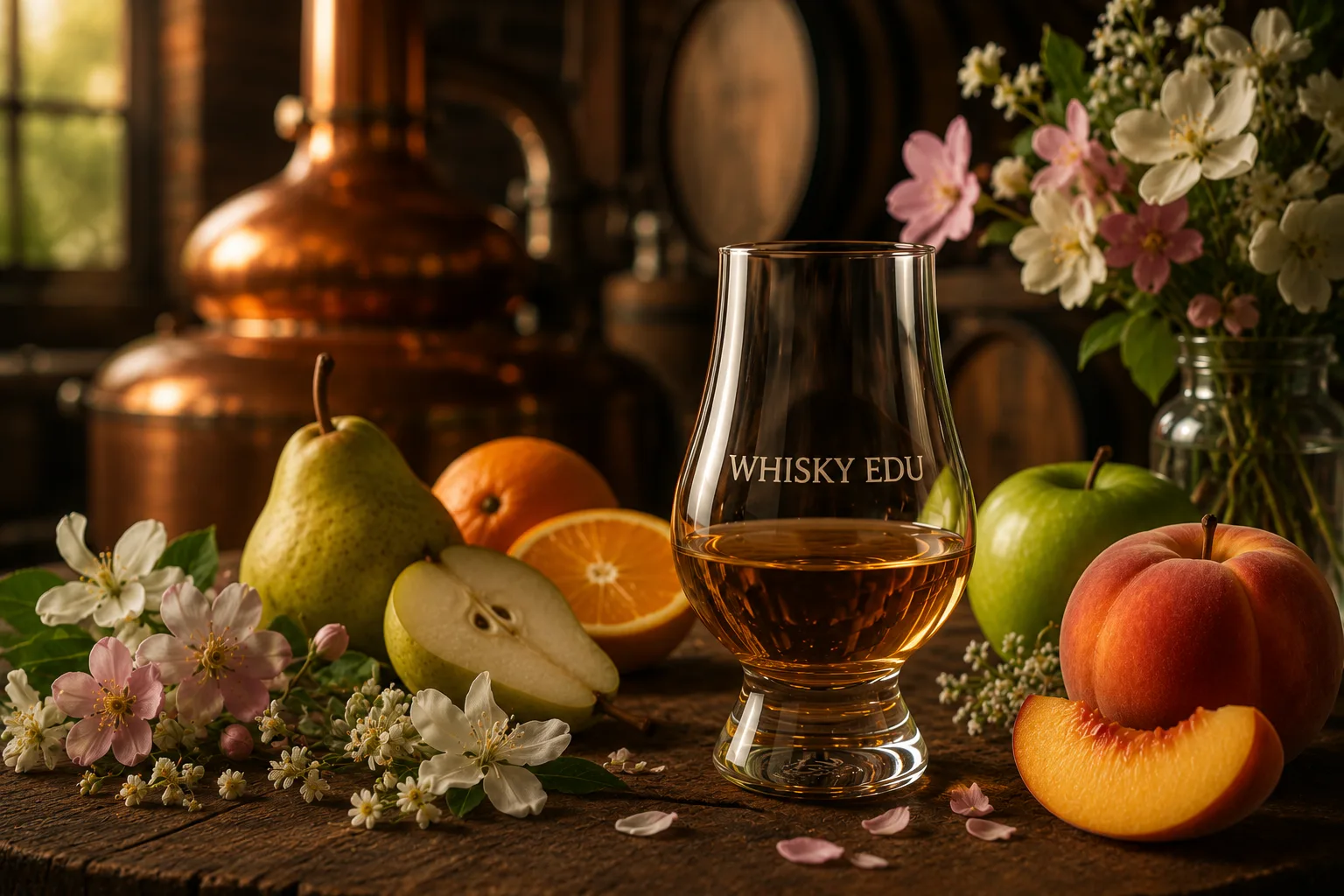
Understanding whisky production begins with a few simple ingredients—grain, water, and yeast. Yet by the time whisky reaches your glass, it has developed hundreds of different aromas and flavors.
How is that possible?
The answer lies in the whisky production process. Every stage, from selecting the grain to aging in oak barrels, contributes to the character of the finished spirit.
By understanding whisky production, you’ll discover why whiskies can taste so different, even when they are made using similar ingredients.
Understanding Whisky Production
Step 1: Selecting the Grain
The journey begins with the grain.
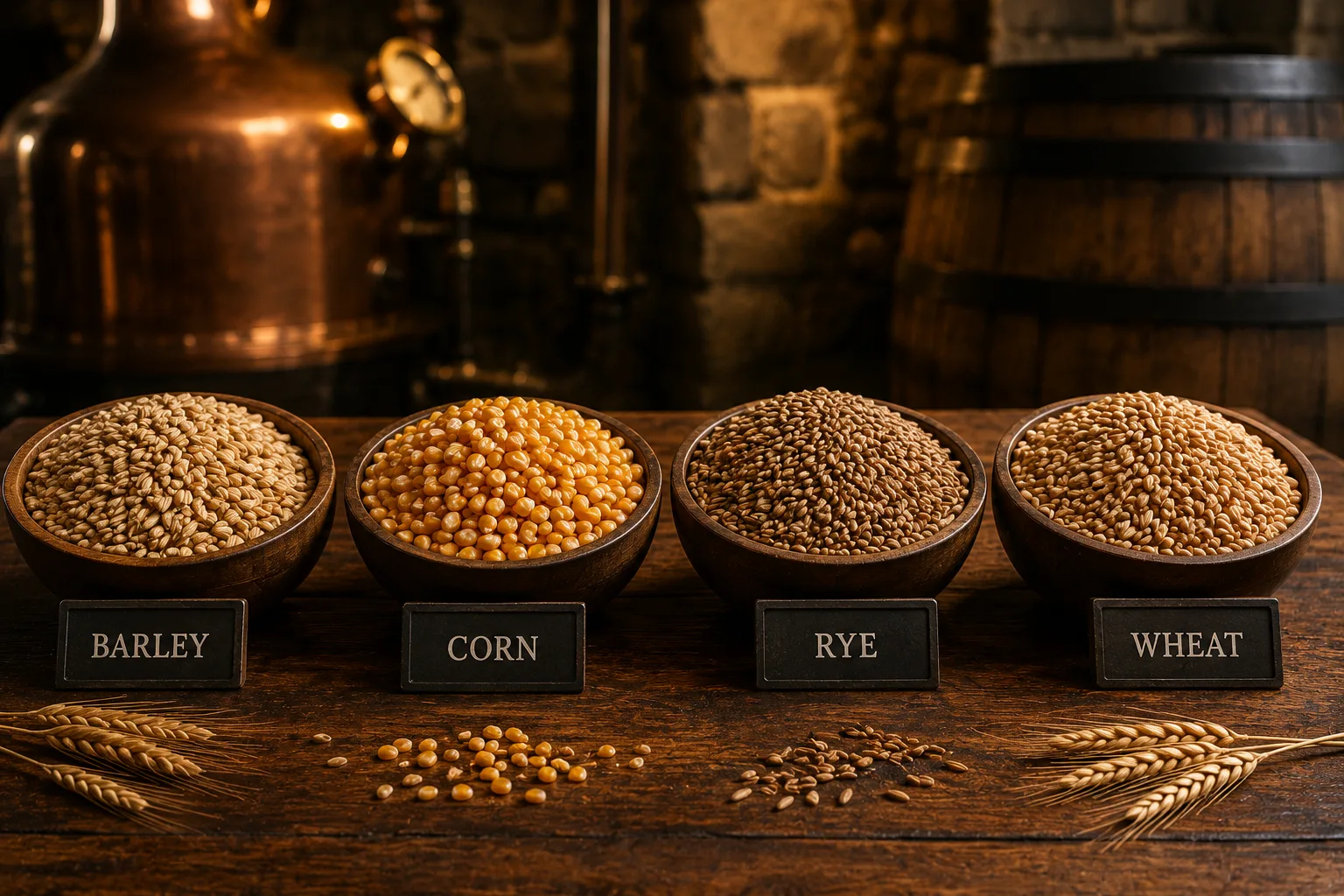
Different grains contribute different characteristics to the final whisky.
- Barley – Rich malt character, biscuits, cereal notes
- Corn – Sweetness, caramel, vanilla
- Rye – Pepper, spice, herbal notes
- Wheat – Soft, creamy texture
The type of grain used provides the foundation for the whisky’s flavor before production even begins.
Understanding Whisky Production
Step 2: Malting
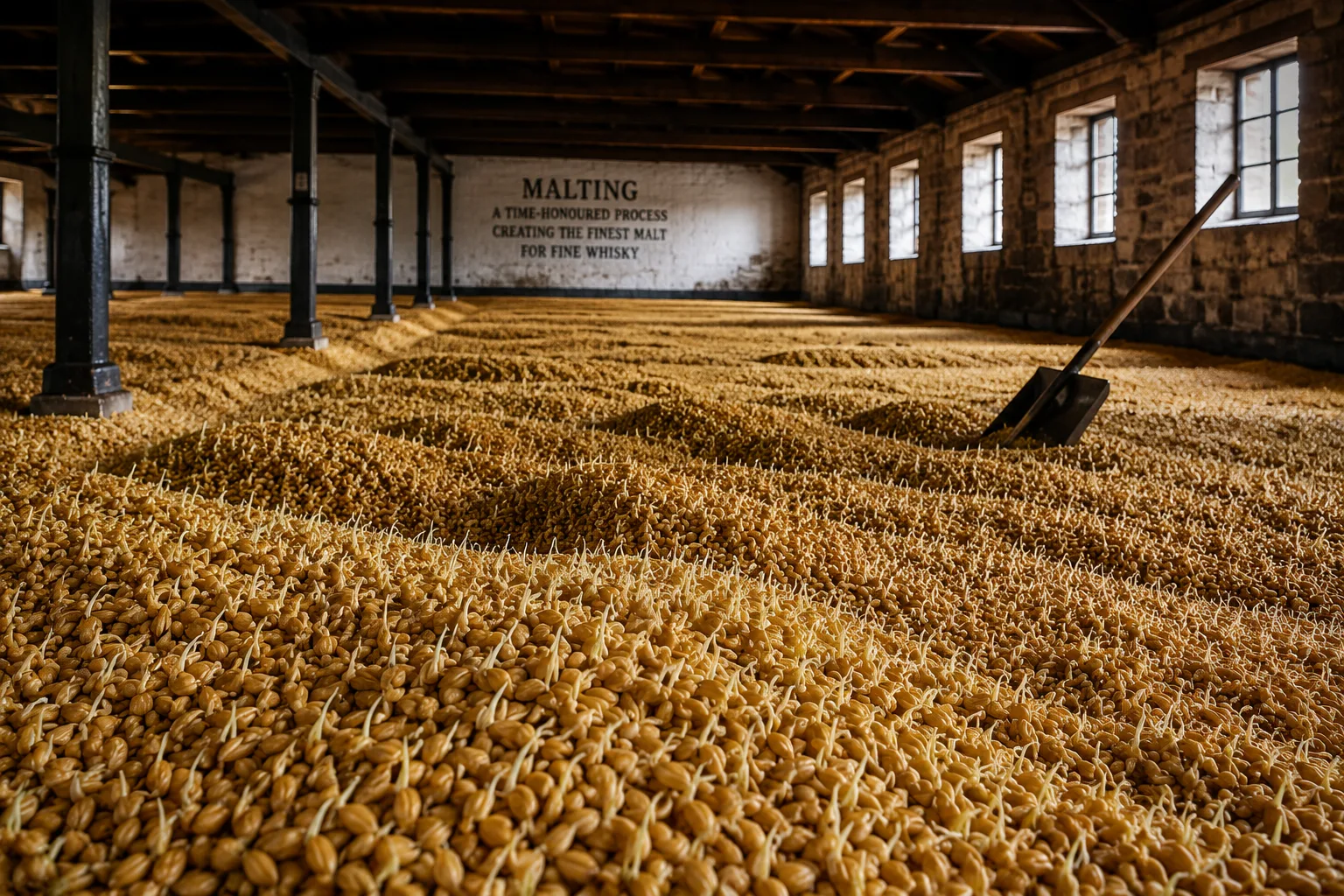
For malt whisky, barley is soaked in water and allowed to germinate.
This natural process activates enzymes that convert starches into fermentable sugars.
Once germination reaches the right point, the barley is dried in a kiln to halt it. At this stage it is called malt. The malt is then milled into a coarse flour known as grist. Germination changes the grain substantially, which is why malted barley tastes nothing like the raw grain it started as.
Some distilleries dry their malt using peat smoke, introducing smoky aromas that remain throughout the whisky’s life. Others use clean hot air, producing an unpeated spirit.
Peat is the single biggest fork in the road for flavor. We map out where it sits against the other styles in the Whisky EDU Flavor Compass.
Understanding Whisky Production
Step 3: Mashing
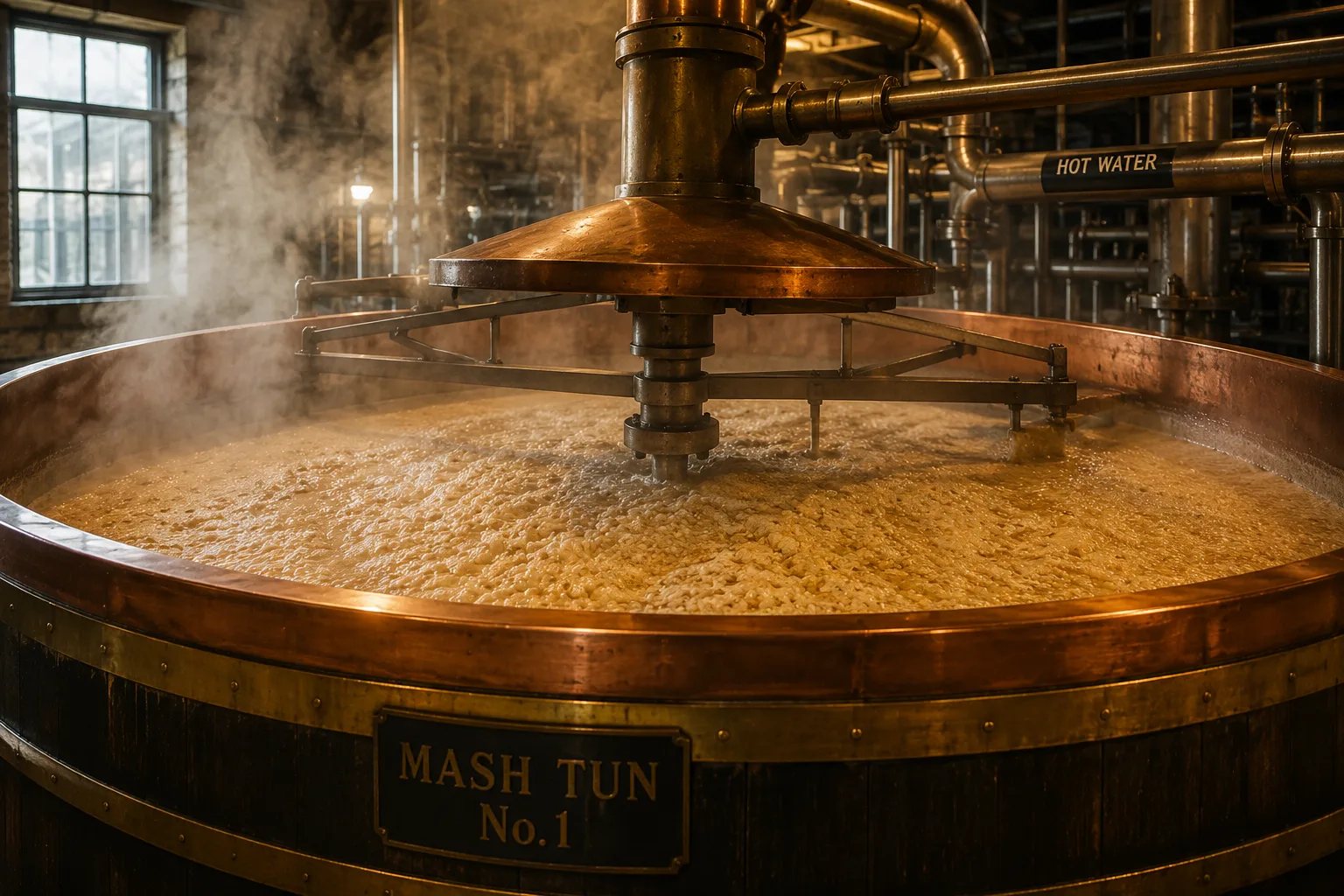
The milled malt is then combined with other milled grains in hot water where the enzymes convert the remaining starches into fermentable sugars. The result is a sweet liquid known as wort.
Understanding Whisky Production
Step 4: Fermentation
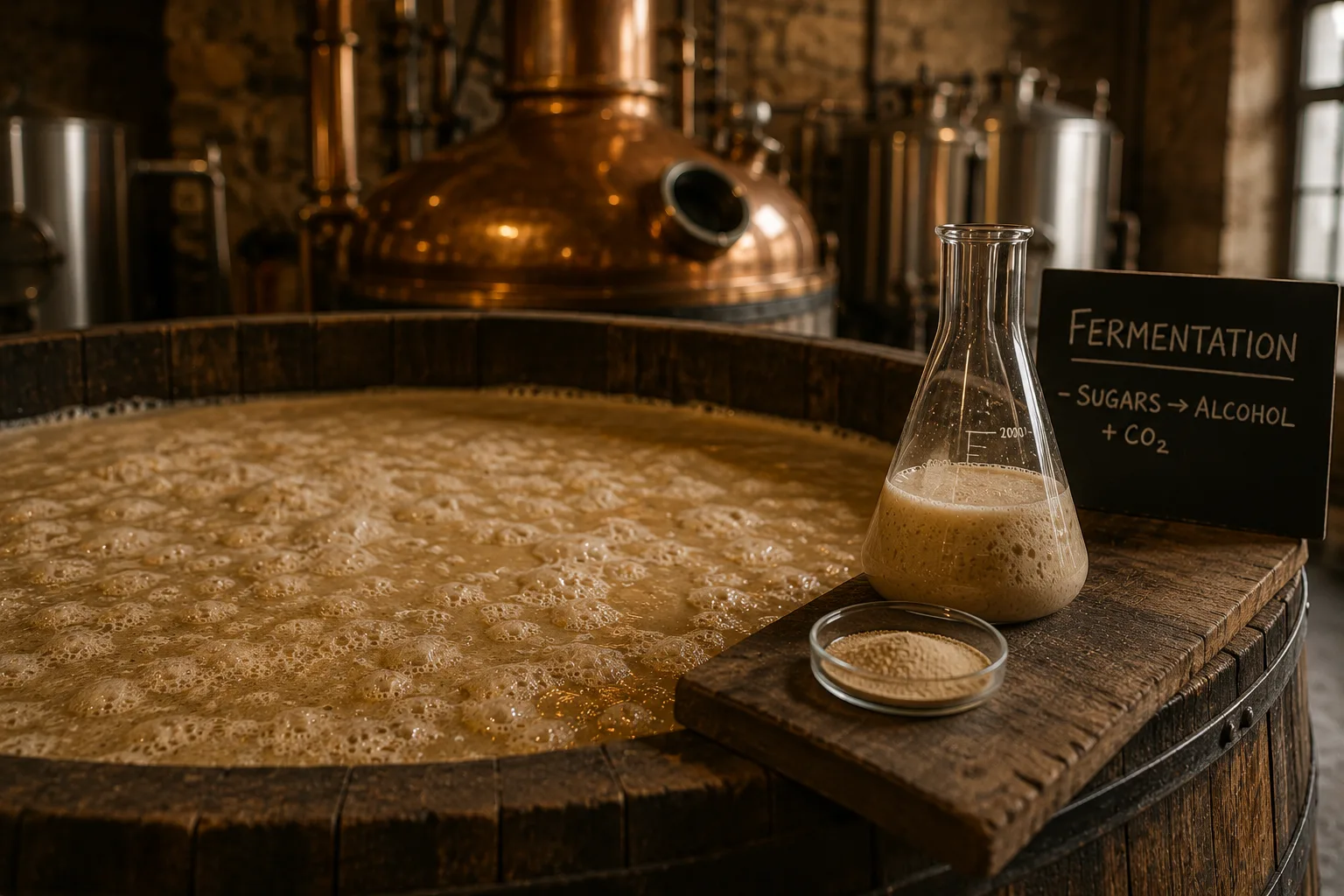
Yeast is added to the wort, converting the sugars into alcohol and carbon dioxide.
During fermentation, yeast also creates hundreds of flavor compounds, esters among them.
These compounds are responsible for many fruity and floral aromas found in whisky.
Longer fermentation times often produce more complex and expressive flavors.
This stage demonstrates that flavor begins developing long before the spirit enters a barrel.
Understanding Whisky Production
Step 5: Distillation
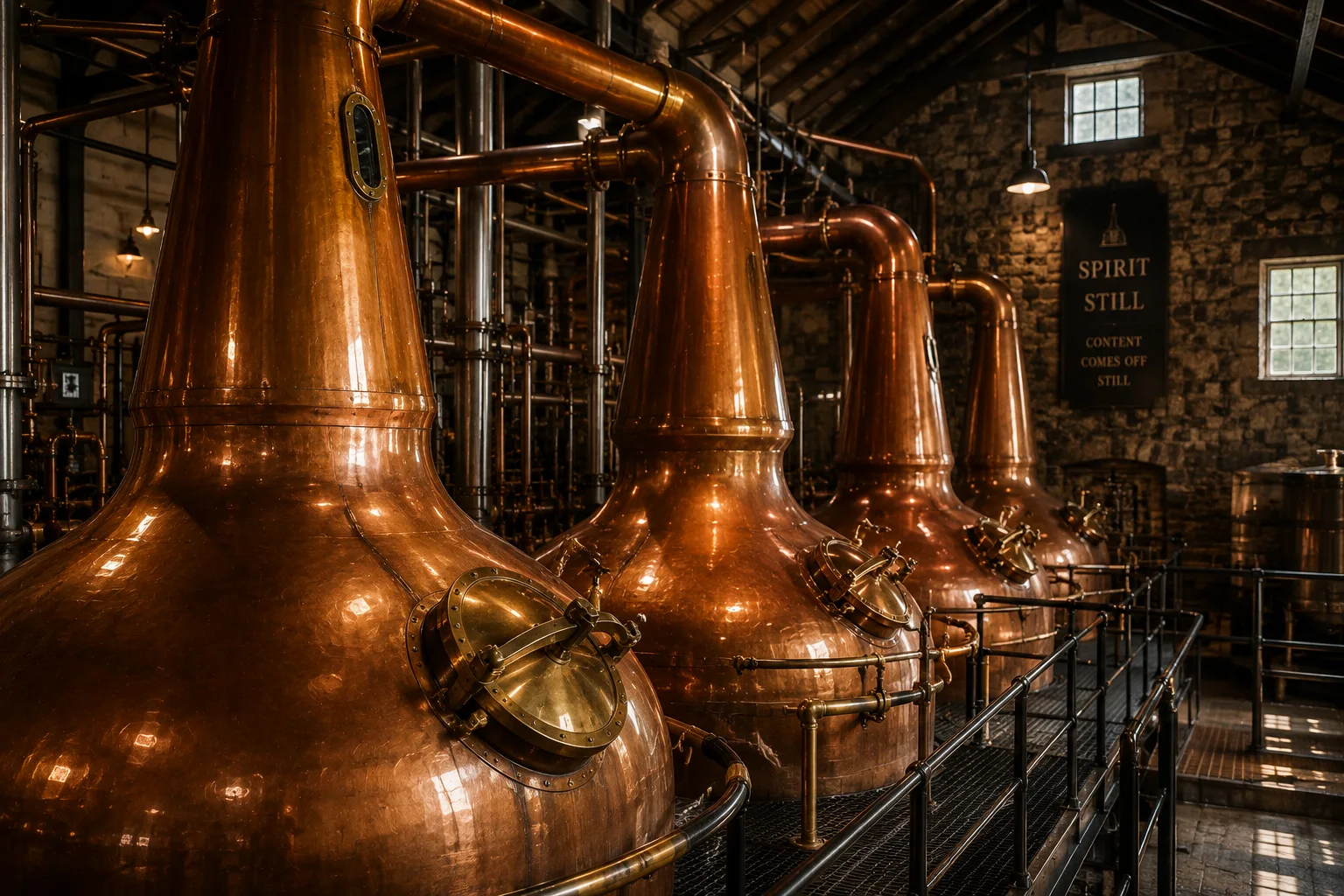
The fermented liquid is distilled to concentrate alcohol and refine flavor.
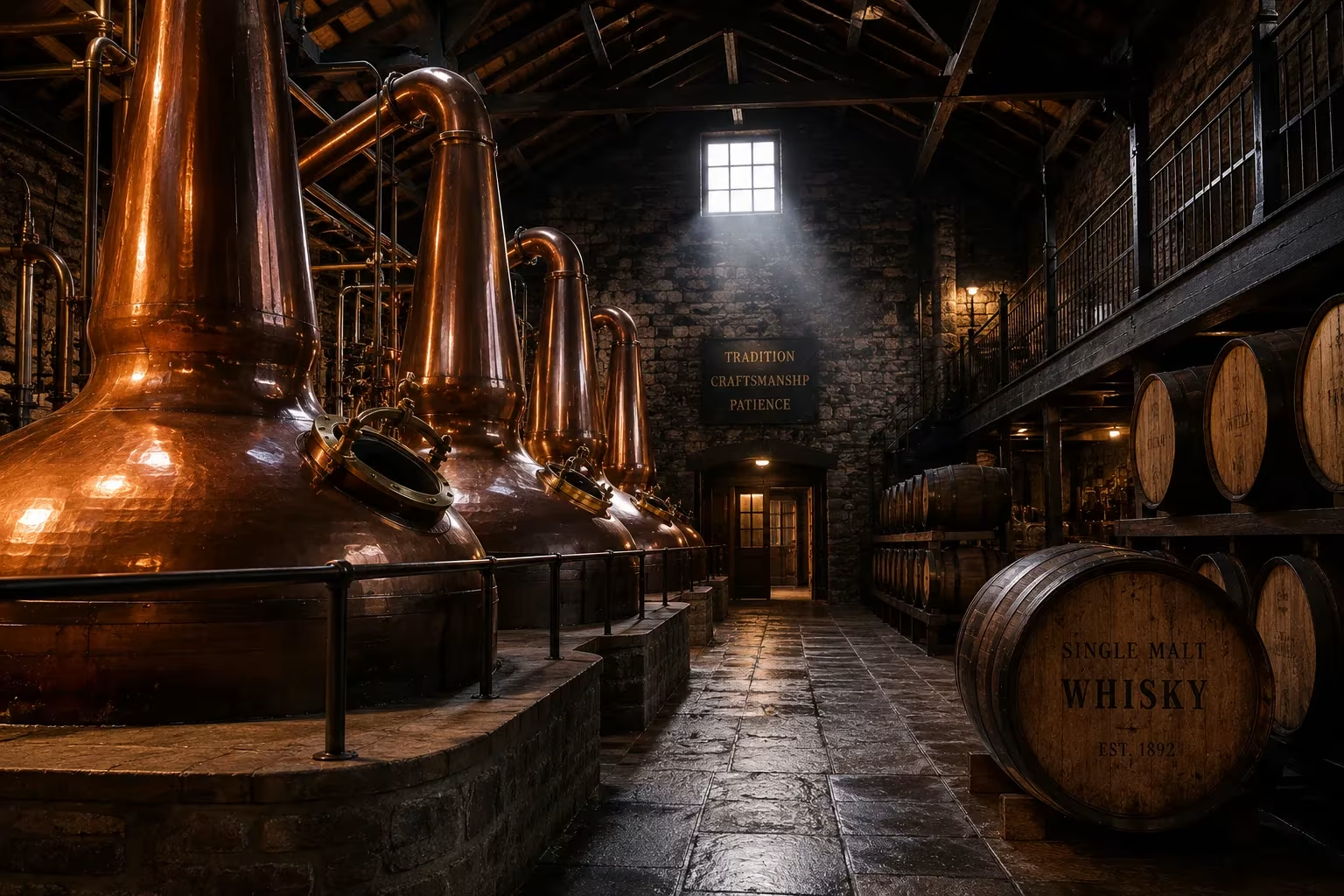
Copper pot stills are commonly used for single malt whisky, while column stills are often used for grain whisky.
The shape and size of the still, along with how the distiller makes the spirit cut, all influence the character of the new make spirit.
Distillation is where precision and craftsmanship begin to shape the whisky’s personality.
Distillation:
Refining the Flavor
Distillation helps shape the final character, texture, and aromatic profile of the spirit.
Distillation concentrates desirable aromas, removes unwanted compounds, and shapes the spirit’s body and texture by carefully selecting which compounds make it into the final spirit.